
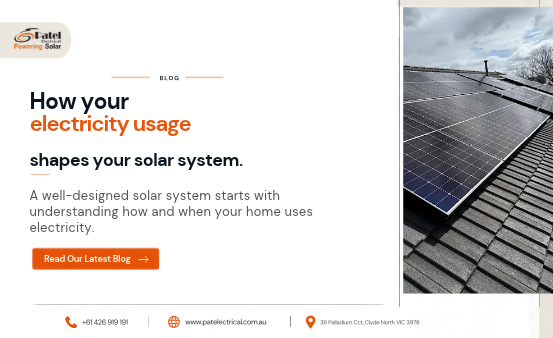
How Does Household Electricity Usage Affect Solar System Design?
Solar system design depends on more than the number of panels that fit on your roof. Your household electricity usage, the time of day you consume energy, the appliances you operate and your future energy requirements all influence the right solar setup for your home.
Effective solar system design starts with understanding how much electricity your household uses and when you use it.
Choosing a solar system for your home involves more than counting the number of panels that fit on your roof. The amount of electricity your household uses, the time of day you use it, the appliances you operate and your future energy requirements all influence how a solar system should be designed.
Two homes with similar roof sizes can have very different electricity needs. One household might use most of its electricity during the day, while another uses very little until everyone returns home in the evening. Although both properties may be suitable for solar, their ideal system configurations could differ considerably.
For homeowners in Melbourne and surrounding areas of Victoria, understanding household electricity consumption is an important first step towards choosing an appropriate solar installation.
This guide explains how energy usage affects solar system sizing, panel placement, inverter selection and the potential value of a home battery.
1. Why Household Electricity Consumption Matters
A solar system should be designed around the way a household actually uses electricity, rather than relying on a standard system size for every property.
Your electricity consumption helps determine how much energy your solar panels need to generate to offset your usage. However, total consumption is only part of the picture. When you use electricity, it can be just as important.
For example, a household that runs its washing machine, dishwasher and other appliances during daylight hours may be able to use more of its solar generation directly. A household that consumes most of its electricity after sunset may need to import more electricity from the grid unless it has suitable energy storage.
When assessing a property, a solar system designer should consider:
- Average daily and annual electricity consumption.
- Daytime versus evening electricity usage.
- Seasonal changes in energy demand.
- High-consumption appliances.
- Available roof space and orientation.
- Existing electrical infrastructure.
- Potential future changes in household consumption.
Considering these factors together helps create a system that is better suited to the property and the people living in it.
2. How to Calculate Your Household’s Electricity Usage
Before deciding on a solar system size, start by reviewing your electricity bills.
Electricity consumption is generally measured in kilowatt-hours (kWh). One kilowatt-hour represents the amount of energy used by a 1,000-watt appliance operating for one hour. For example, a 2,000-watt appliance running for half an hour uses approximately 1 kWh of electricity.
Your electricity bill may show consumption for a billing period, such as 30, 60 or 90 days. You can estimate average daily consumption by dividing the total kilowatt-hours by the number of days in that period.
Example calculation
Suppose your household uses 1,800 kWh over a 90-day billing period.
1,800 ÷ 90 = 20 kWh per day.
This gives you an average daily consumption of 20 kWh.
However, averages can hide important differences. Electricity usage may increase during hot weather when air conditioning is running or during colder months when households use more heating. Reviewing several bills across the year can provide a more representative picture of your energy requirements.
If your electricity provider offers half-hourly consumption data or a smart meter portal, that information can be particularly useful. It may show when your household consumes the most electricity and help identify opportunities to use more solar energy directly.
3. How Different Household Sizes Affect Solar System Design
Household size is only one factor in solar system design; appliance use and daily energy requirements also influence the recommended setup. The number of people living in a property can influence electricity consumption, but household size alone does not determine the ideal solar system.
A family of five that uses gas for cooking and hot water may have different electricity requirements from a couple who operate electric heating, induction cooking and multiple air conditioners.
One or two occupants
Work schedules, hot water, cooking and daytime occupancy can influence electricity demand.
Families with children
Laundry, refrigeration, cooking, entertainment and cooling can contribute to overall household consumption.
Larger households
Multiple appliances, heating and cooling systems, and simultaneous electricity demand may affect the required solar system configuration.
Homes with an electric vehicle
Vehicle charging can introduce additional electricity demand, depending on driving habits and charging schedules.
All-electric homes
Electric heating, hot water, cooking and other substantial electrical loads can influence the amount of solar generation required.
These profiles are starting points, not fixed sizing rules. A small household with an electric vehicle and ducted air conditioning could consume more electricity than a larger household with modest energy requirements. The objective is to understand the property’s actual demand before selecting equipment.
4. Why the Time of Day You Use Electricity Matters
Solar panels generally generate the most electricity during daylight hours, with production varying according to sunlight, weather, season, roof orientation and shading. Household electricity demand does not necessarily follow the same pattern.
Home A — Daytime electricity usage
The occupants work from home, run appliances during the day and operate cooling systems when solar generation is available.
Home B — Evening electricity usage
The occupants leave for work in the morning and return in the evening, when they use cooking appliances, heating, lighting and entertainment devices.
Even though both homes use the same total amount of electricity, Home A may be able to consume a greater proportion of its solar generation directly. Home B may export more excess electricity during the day and purchase electricity from the grid in the evening.
This difference can influence whether the system should be designed around daytime consumption, whether a battery deserves consideration, and how flexible appliances can be scheduled.
The goal is not simply to generate as much electricity as possible. It is to design a system that works effectively with the household’s consumption patterns.
5. How High-Energy Appliances Influence Solar System Design
Certain household appliances can significantly influence the size and configuration of a solar system.
Air conditioning and heating
Heating and cooling can account for substantial electricity consumption, particularly in homes with ducted systems. Demand may also coincide with periods of strong solar generation during hot afternoons.
Understanding the capacity, operating schedule and seasonal usage of these systems helps a designer estimate the household’s energy requirements more accurately.
Electric hot water systems
Electric hot water systems can consume considerable energy, depending on the system type, household size and usage.
Where appropriate, scheduling water heating during periods of solar generation may increase the amount of solar electricity used within the home. Any scheduling changes should remain compatible with the hot water system’s operating requirements.
Electric vehicles
An electric vehicle can introduce a significant additional electricity load. However, the impact depends on how frequently the vehicle is driven, how much charging is required and whether charging occurs during daylight hours or overnight.
A household that can charge its vehicle while solar panels are generating electricity may have different system requirements from a household that charges exclusively after returning home at night.
Electric cooking and laundry appliances
Induction cooktops, electric ovens, clothes dryers, washing machines and dishwashers also contribute to household consumption.
Individually, their effect may be manageable. Together, their operating schedules can influence daytime demand and the potential for direct solar self-consumption.
6. How Household Usage Determines Solar System Size
A suitable solar system design should balance expected electricity generation with household consumption, roof space and connection requirements.
A system that is too small may offset only a limited portion of the household’s consumption. A larger system may generate more electricity, but its suitability depends on factors such as roof capacity, connection arrangements, export limits and the timing of household demand.
For example, consider a household using 20 kWh of electricity per day. It would be incorrect to assume that a solar system must generate exactly 20 kWh each day to meet that demand.
Solar production changes throughout the day and across the seasons. Some electricity will be consumed directly, some may be exported, and additional electricity may need to be imported when solar generation is insufficient.
A solar designer needs to estimate expected generation for the proposed installation and compare it with the household’s consumption profile.
Important considerations include:
- Daily consumption: How much electricity does the property use?
- Daytime demand: How much electricity can be used while the panels are generating?
- Solar production: How much energy is the proposed system expected to generate?
- Roof suitability: How much usable roof space is available, and what are its orientation and shading conditions?
- Export arrangements: Are there network or connection limits affecting how much electricity can be exported?
- Future demand: Is the household planning to install an EV charger, electric hot water or additional air conditioning?
These factors help determine an appropriate system configuration rather than relying on a generic recommendation.
7. Why Roof Orientation and Shading Still Matter
Household consumption is only one part of solar system design. The roof determines how effectively the proposed panels can capture available sunlight.
In Melbourne, north-facing panels often provide strong overall annual generation. East-facing panels can generate more electricity earlier in the day, while west-facing panels can produce more in the afternoon.
The best arrangement depends on the roof, shading, system configuration and household demand.
For example, a household with substantial afternoon electricity consumption may benefit from a design that considers afternoon solar generation. However, the designer must assess the expected annual output and installation constraints before deciding on panel placement.
Shading from trees, neighbouring buildings, chimneys or other roof structures can also reduce production. A suitable design therefore considers both sides of the equation: when the home needs electricity and when the proposed panels can generate it.
8. Should You Design Your Solar System Around Future Energy Needs?
Solar systems should not be designed exclusively around current electricity consumption if major changes are planned.
A household may have relatively modest electricity usage today but expect to purchase an electric vehicle, replace gas appliances with electric alternatives or install additional heating and cooling.
Before installation, consider whether you expect to:
- Purchase an electric vehicle.
- Install a home EV charger.
- Replace gas cooking or hot water with electric equipment.
- Add ducted air conditioning or a heat pump.
- Extend the property or add a granny flat.
- Change your work arrangements and spend more time at home.
Future requirements do not automatically mean that you should install the largest possible solar system now. Equipment costs, roof capacity, network constraints and the feasibility of upgrading the system later all matter.
A better approach is to discuss likely changes with your installer and understand which parts of the system can be expanded or upgraded. Inverter capacity, available roof space, electrical infrastructure and equipment compatibility may affect future options.
9. How a Home Battery Changes the Design Considerations
A home battery can store some of the electricity generated by solar panels for use later, including during evening periods when solar production has declined. However, a battery is not automatically necessary for every household.
Its suitability depends on the difference between solar generation and electricity demand, the amount of excess energy available to charge it, the timing of consumption, battery capacity, efficiency and the applicable electricity tariff.
Consider a household that generates excess solar electricity during the afternoon but consumes substantial electricity after sunset. A suitably configured battery may help shift some of that daytime generation to the evening.
By contrast, a household that already uses most of its solar electricity during daylight hours may have less excess generation available for battery charging.
Battery selection should also consider:
- Usable battery capacity.
- Power output.
- Backup functionality, if required.
- Compatibility with the existing or proposed solar system.
- Household electricity consumption after sunset.
- Available excess solar generation.
For more information, read our guide to home battery storage.
10. Understanding Solar Self-Consumption and Grid Imports
Solar self-consumption refers to the portion of the electricity generated by your solar system that is used directly by your household.
For example, if your solar panels generate 10 kWh during a particular period and your home uses 6 kWh of that generation directly, your direct solar self-consumption is 6 kWh. The remaining 4 kWh may be exported, stored or otherwise managed by the system, depending on its configuration and operating conditions.
This distinction matters because total solar generation does not necessarily equal the amount of electricity you avoid purchasing from the grid.
Your household may still import electricity at night, during periods of low solar generation or whenever demand exceeds available solar output.
Reviewing consumption and generation together helps establish whether changes to appliance schedules, system design or energy storage could improve how your household uses solar electricity.
11. What Information Should You Prepare Before a Solar Assessment?
You can make a solar assessment more useful by preparing information about your household and property.
Before speaking with a solar installer, gather:
- Recent electricity bills covering different seasons, where available.
- Your average daily electricity consumption.
- Smart meter or half-hourly consumption data, if accessible.
- A list of major electrical appliances and their usual operating times.
- Information about existing solar panels, inverters or batteries.
- Details of planned EV charging or other electrical upgrades.
- Any known roof shading or installation constraints.
This information gives the designer a clearer understanding of your actual energy needs.
A professional assessment can then consider the roof, expected generation, electrical infrastructure, equipment compatibility and relevant network requirements.
12. Getting the Right Solar System for Your Home
There is no single solar system size that suits every household. The right design depends on how much electricity you use, when you use it, the available solar resource and the practical constraints of your property.
For homeowners in Melbourne, Clyde North, Berwick, Cranbourne, Pakenham and surrounding areas, reviewing actual electricity consumption is a useful starting point for making an informed decision.
Rather than selecting a system based only on the number of bedrooms or a neighbour’s installation, start with your own energy data and property requirements.
The right solar system design should reflect your actual electricity usage, property conditions and future energy requirements.
Patel Electrical can help homeowners assess their solar installation requirements and consider how their current and future electricity needs may influence system design.
Visit Patel Electrical to learn more about our solar services.
Frequently Asked Questions
How does electricity consumption affect solar system size?
Higher electricity consumption may justify a larger solar system, but the ideal size also depends on daytime demand, expected solar generation, roof space, export limits and future energy requirements.
How do I calculate my home’s daily electricity usage?
Divide the electricity consumed during a billing period by the number of days in that period. For example, 1,800 kWh over 90 days equals an average of 20 kWh per day.
Is a larger solar system always better?
No. A larger system may generate more electricity, but its suitability depends on roof conditions, consumption patterns, installation costs, connection arrangements and the value of exported electricity.
Does working from home affect solar system design?
It can. Working from home may increase daytime electricity consumption, potentially allowing more solar generation to be used directly rather than exported.
Can an electric vehicle change the size of solar system I need?
Yes. EV charging can increase household electricity demand. The additional solar capacity required depends on driving habits, charging frequency, charging times and the vehicle’s energy consumption.
Should I install a battery if my electricity usage is high at night?
A battery may be worth assessing if your solar system regularly generates excess electricity during the day. Its suitability depends on available surplus generation, evening demand, battery specifications and electricity tariffs.
Does roof orientation affect the amount of solar electricity I can use?
Yes. Roof orientation influences when and how much electricity panels generate. Matching generation with household demand can help improve direct solar self-consumption.
How does seasonal electricity consumption affect solar design?
Heating, cooling and changing daylight hours can cause electricity consumption and solar generation to vary throughout the year. Reviewing bills across multiple seasons helps provide a more representative picture.
Can I add more solar panels if my electricity usage increases?
Potentially. Expansion depends on available roof space, inverter capacity, electrical infrastructure, system compatibility and applicable network requirements.
Should I choose a solar system based on the number of people in my home?
Household size can provide context, but actual electricity consumption and the timing of usage are more useful for determining an appropriate system design.
Will solar panels eliminate my electricity bill?
Not necessarily. You may still import electricity when solar generation is insufficient, and your bill may include supply charges and other applicable costs.
What is the most important information to provide a solar installer?
Recent electricity bills, consumption data, major appliance usage, roof information and any planned electrical upgrades are useful starting points for an accurate assessment.
Planning a solar installation?
Visit patelelectrical.com.au to learn more about solar services and discuss the requirements of your home.